Skip to content

J.R. Gonzales
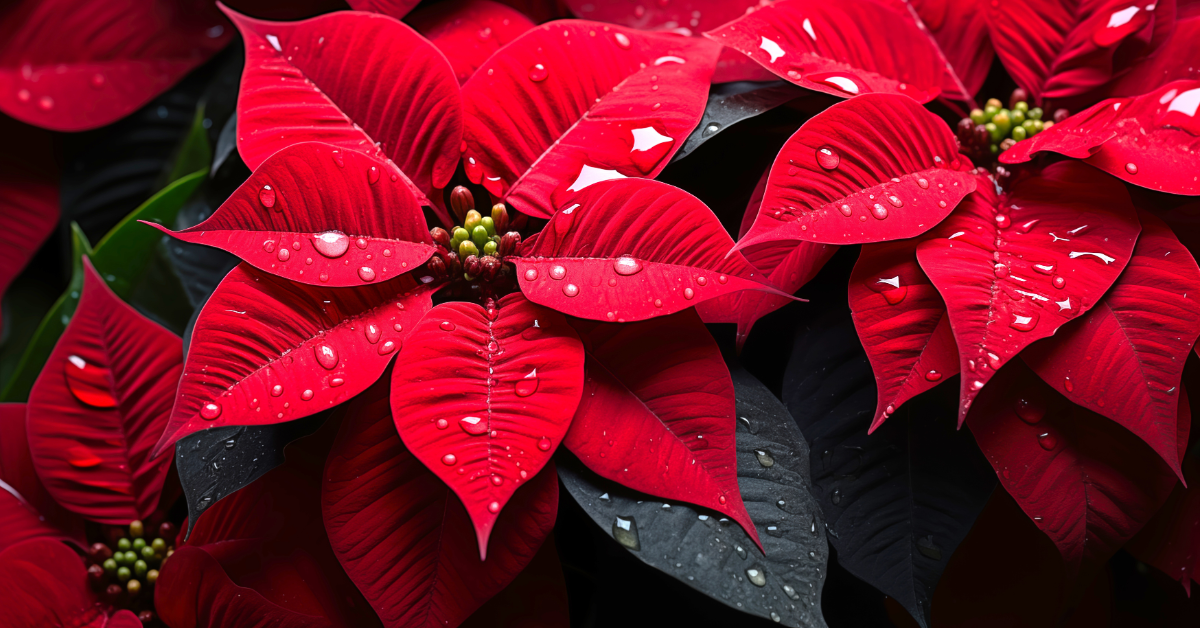
Every holiday season, the poinsettia lights up homes, offices, and churches with its vibrant red leaves. But this beloved plant has a rich history that stretches back centuries and across continents.
Ancient Roots in Mexico
Poinsettias (Euphorbia pulcherrima) are native to southern Mexico and Central America. The Aztecs called the plant Cuetlaxóchitl, meaning “flower that withers,” and cultivated it for both practical and ceremonial purposes. They:
- Used the red bracts to create dyes for fabrics.
- Employed the sap for medicinal treatments, including fevers and swelling.
- Considered the plant sacred, associating its vibrant color with purity, life, and the sun.
Legend and Christmas Tradition
The poinsettia became associated with Christmas through Mexican folklore. According to tradition, a poor girl named Pepita wanted to give a gift to the baby Jesus but had nothing to offer. She gathered weeds from the roadside, and when placed at the church altar, they miraculously bloomed into bright red flowers. Known as Flor de Nochebuena (“Flower of the Holy Night”), the poinsettia became a symbol of humility, love, and generosity.
Introduction to the United States
In 1828, Joel Roberts Poinsett, the first U.S. ambassador to Mexico and a passionate botanist, discovered the plant and sent cuttings to his South Carolina home. He shared them with friends and botanical gardens, sparking interest among American gardeners. By the mid-19th century, the plant was officially named poinsettia in his honor.
Commercialization and the Ecke Family
Poinsettias remained mostly a curiosity until the early 20th century, when the Ecke family of California developed a technique for producing fuller, more decorative plants. Through savvy marketing, including sending plants to TV studios and holiday events, they transformed the poinsettia into a must-have Christmas decoration. By the 1960s, it was a household staple.
National Recognition
In 2002, the U.S. Congress declared December 12 National Poinsettia Day to honor Joel Poinsett and the plant’s contribution to American holiday traditions. Today, over 70 million poinsettias are sold annually in the U.S., making it the most popular potted plant of the season.
Fun Historical Facts
- Poinsettias were originally used by Aztecs in winter solstice celebrations to honor the sun god.
- The traditional red color represents blood, life, and the spirit of giving in both Aztec and Christian symbolism.
- White and pink poinsettias were cultivated later in the 19th and 20th centuries as hybrids for decorative purposes.
- Poinsettias are not naturally poisonous, a common myth—though their sap can cause mild irritation if ingested.