Skip to content

J.R. Gonzales
Few symbols in the world are as instantly recognizable as the dollar sign. It appears everywhere—from price tags and paychecks to stock markets and blockbuster movie revenues. But have you ever wondered where this iconic symbol actually came from? Its origins stretch back centuries, long before the United States even existed.
A Symbol Born from Global Trade
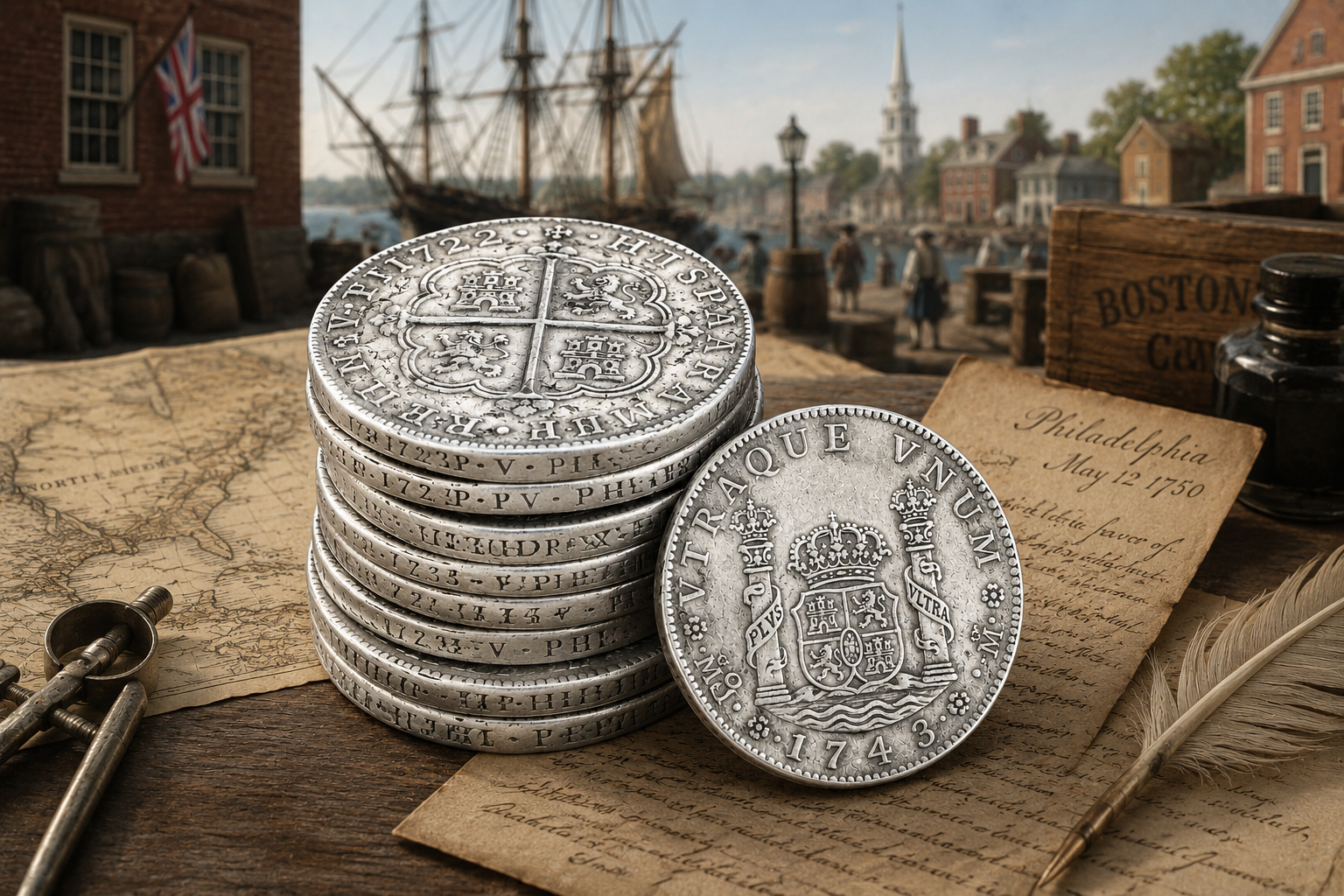
The most widely accepted theory traces the dollar sign to the Spanish dollar, commonly known as the “piece of eight.” During the 17th and 18th centuries, Spanish silver coins dominated international commerce. They circulated extensively throughout Europe, the Americas, and even Asia, making them one of the world’s first truly global currencies.
In colonial America, British coins were often scarce. As a result, Spanish dollars became the currency of choice for merchants, settlers, and governments alike. If you lived in Boston, Philadelphia, or Charleston in the 1700s, chances are you handled Spanish silver regularly.
How “Ps” Became “$”
Business records from the era frequently abbreviated the peso, or Spanish dollar, as “Ps.” Over time, merchants and clerks developed faster ways to write the abbreviation. The letters began to overlap, with the “P” written over the “S.”
Eventually, the curved portion of the “P” disappeared, leaving only the vertical stroke crossing the “S.” The result was the familiar “$” symbol we know today.
It’s a wonderful example of how practicality often shapes language and symbols.
America’s Adoption of the Dollar
Following the American Revolutionary War, the newly independent United States needed its own monetary system. In 1792, the United States Congress passed the Coinage Act, officially establishing the U.S. dollar.
Importantly, the American dollar was modeled directly after the Spanish milled dollar, which Americans already trusted and used daily. In fact, Spanish coins remained legal tender in the United States until 1857.
Other Theories
Some historians suggest the dollar sign may have been inspired by the Spanish coat of arms, which featured the Pillars of Hercules wrapped with a ribbon. The design bears a striking resemblance to an “S” crossed by vertical lines.
While this theory is visually appealing, most scholars favor the simpler explanation: the symbol evolved naturally from handwritten accounting shorthand.
One Line or Two?
If you’ve ever seen a dollar sign with two vertical lines, you’re not imagining things. Early versions often used two strokes. Over time, the single-stroke version became more common because it was easier to write and reproduce in printing.
Today, both forms are considered correct, though the single-line version dominates modern typography.
A Global Icon
What began as shorthand for Spanish silver has become one of the most powerful symbols in the world. As the United States rose to economic prominence, the dollar sign became synonymous with wealth, business, and financial opportunity.
From colonial marketplaces to digital transactions, the “$” continues to represent commerce on a global scale.
Final Thoughts
The next time you see a dollar sign, remember that it carries centuries of history. It is more than just a mark on a keyboard or a price tag—it is a symbol shaped by international trade, colonial economies, and the birth of modern finance.
Not bad for two letters scribbled together by a hurried merchant centuries ago.