Skip to content

J.R. Gonzales
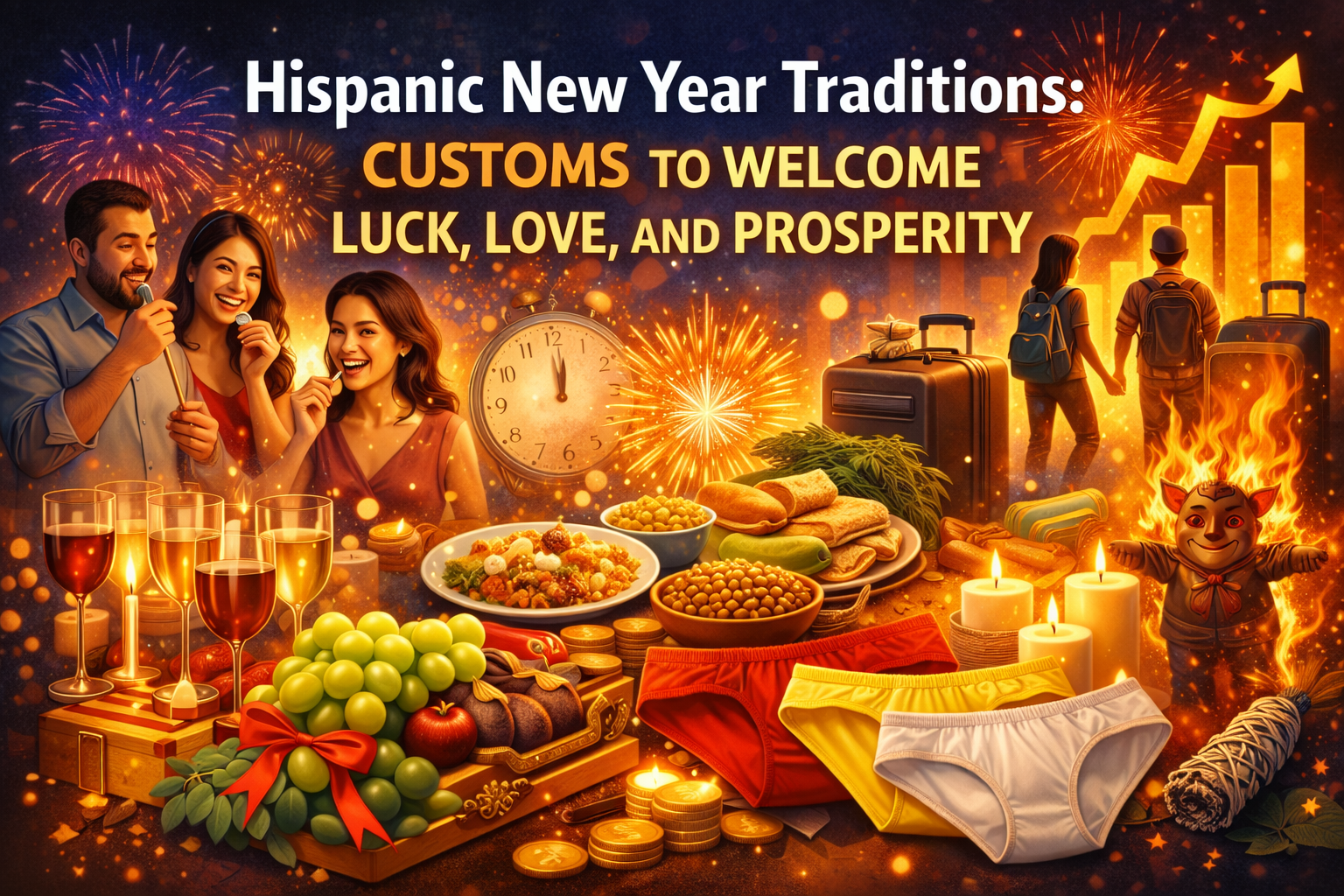
Across Hispanic cultures, the New Year is more than a countdown; it’s a moment rich with symbolism, intention, and tradition. From food and clothing to meaningful rituals passed down through generations, these customs reflect deep cultural values centered on family, hope, and renewal. While practices vary by country and even by household, many traditions are widely shared throughout Latin America and Hispanic communities in the United States.
Below are some of the most cherished customs for ringing in the New Year:
The Twelve Grapes at Midnight
One of the most iconic traditions, especially in Spain, Mexico, and much of Latin America, is eating twelve grapes at the stroke of midnight. Each grape represents a month of the coming year. As the clock chimes twelve times, participants eat one grape per chime while silently making a wish or setting an intention for each month ahead. It’s joyful, a little chaotic, and deeply symbolic of hope for the future.
Wearing Colored Underwear for Good Fortune
This playful yet meaningful custom is rooted in color symbolism:
- Red: Love and passion
- Yellow: Prosperity, success, and financial abundance
- White: Peace and harmony
Some families even insist the underwear be worn inside out until midnight for the tradition to “work.”
Walking with Luggage to Invite Travel
In countries like Mexico, Colombia, and Peru, people grab an empty suitcase and walk around the block or at least through their home at midnight. This ritual symbolizes a desire for travel, new experiences, and adventure in the coming year.
Money Rituals for Prosperity
Financial abundance is a common New Year intention. Popular customs include:
- Placing coins or cash in shoes or pockets
- Holding money in your hand at midnight
- Sweeping the house outward to symbolically remove financial hardship and make room for prosperity
These rituals reflect the belief that intentional actions can help set the tone for the year ahead.
Spiritual Cleansing and Letting Go
Many Hispanic New Year traditions draw from Indigenous and Afro-Latin spiritual practices. Common rituals include:
- Lighting white candles for clarity, protection, and renewal
- Writing down worries, bad habits, or painful experiences from the past year and safely burning the paper
- Cleansing the home or body with herbs such as basil or sage
These practices emphasize reflection, healing, and starting the year emotionally and spiritually clean.
Traditional Foods with Meaning
Food plays a central role in Hispanic celebrations, and New Year’s Eve is no exception. Symbolic dishes often include:
- Lentils: Represent abundance and prosperity
- Pork: Associated with progress and forward movement
- Family favorites like tamales, arroz con pollo, or bacalao, which bring loved ones together around the table
Sharing a meal reinforces family bonds and honors cultural heritage.
Burning the “Año Viejo”
In Ecuador and parts of Colombia, families create an effigy called the Año Viejo (Old Year), often stuffed with paper or sawdust. At midnight, it is burned to symbolize letting go of the past year’s hardships, mistakes, and disappointments, making space for renewal and new beginnings.
More Than Traditions: A Celebration of Family and Hope
Above all, Hispanic New Year celebrations center on family, gratitude, and intention. Music fills homes, prayers are shared, laughter echoes late into the night, and people take time to reflect on where they’ve been and where they hope to go.
These traditions aren’t just rituals; they are cultural expressions of resilience, optimism, and connection. As the New Year begins, they remind us that while the calendar changes, what truly matters is how we choose to move forward—together.