Skip to content

J.R. Gonzales
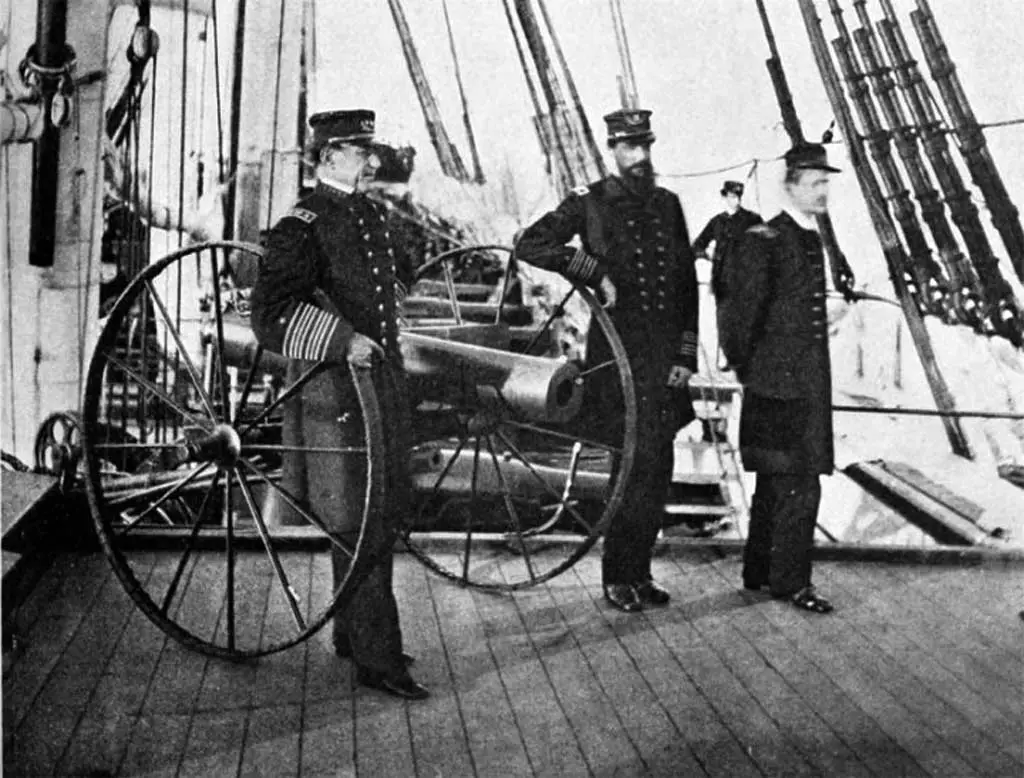
When discussing legendary figures in American naval history, Admiral David Farragut stands among the most iconic. But while his battlefield brilliance is widely celebrated, fewer Americans know that Farragut was of Hispanic descent, born to a Spanish immigrant father who had also fought for American independence.
Farragut’s legacy as the first admiral in U.S. Navy history is not just one of military brilliance—it’s a story of Hispanic contributions to American military leadership and a powerful reminder of how diversity has shaped the nation’s strength from the very beginning.
Hispanic Roots: Farragut’s Family and Early Life
Born in 1801 near Campbell’s Station, Tennessee, David Glasgow Farragut was the son of Jordi (George) Farragut, a native of Minorca, Spain, who had served in the American Revolutionary War. His mother, Elizabeth Shine, was of Scotch-Irish heritage. This unique blend of cultures reflected the melting pot spirit of the early United States.
After the death of his mother from yellow fever, David was taken in by Commodore David Porter, a close family friend. Porter recognized the boy’s intelligence and potential and brought him into the Navy at just nine years old—a formative decision that launched Farragut into history.
A Naval Career Forged in War
Farragut’s naval journey began aboard the USS Essex during the War of 1812, where he saw real combat while still a child. But it was during the American Civil War that he rose to legendary status through a series of bold, strategic victories that redefined naval warfare.
The Capture of New Orleans (1862)
As part of the Union’s campaign to control the Mississippi River, Farragut led a daring assault on the Confederacy’s largest port. Navigating past heavily defended Forts Jackson and St. Philip, his fleet captured New Orleans, cutting off a vital Confederate supply line. This victory was a turning point that showcased the power of naval operations in land-based warfare.
The Battle of Mobile Bay (1864)
Perhaps Farragut’s most famous moment came during this battle. As his fleet entered a mine-filled harbor (then called “torpedoes”), he ignored the danger and famously commanded, “Damn the torpedoes, full speed ahead!”
That fearless decision led to another major victory, securing one of the last Confederate ports and boosting Union morale at a critical time.
Farragut’s Lasting Impact on Naval Warfare
Farragut’s achievements weren’t limited to battlefield victories. He was a pioneer in shaping modern naval strategy, helping the United States emerge as a dominant maritime power.
Tactical Innovations and Leadership
-
Offensive-First Doctrine: He championed aggressive, decisive attacks instead of passive defense—changing how naval battles were fought.
-
Joint Operations: Farragut coordinated with Army forces during campaigns like New Orleans and Vicksburg, demonstrating the power of integrated strategy.
-
Use of Ironclads: Recognizing the potential of new technology, Farragut incorporated ironclad ships into his fleet—decades ahead of his time.
-
Crew Training and Morale: He implemented rigorous discipline and professional training, ensuring efficiency even under extreme combat conditions.
-
Blockade Efficiency: Farragut’s focus on speed and maneuverability improved the Union’s naval blockade, crippling Confederate supply lines and commerce.
Historic Promotions: Breaking New Ground in U.S. Naval Ranks
In honor of his service, Congress created entirely new naval ranks just for Farragut:
| Year | Rank | Significance |
|---|---|---|
| 1862 | Rear Admiral | First in U.S. history |
| 1864 | Vice Admiral | First ever promoted |
| 1866 | Admiral of the U.S. Navy | Only one to hold the title at the time |
These titles not only celebrated his leadership—they marked the evolution of the United States Navy into a global force and Farragut as the man who led the transformation.
The Legacy of Admiral David Farragut: A Hispanic-American Icon
From the son of a Spanish immigrant to the highest-ranking naval officer in the nation, Farragut’s life is a testament to Hispanic-American contributions to U.S. military history. His story is one of resilience, vision, and innovation—and it’s one that deserves to be told alongside America’s most revered heroes.
Why Farragut’s Legacy Matters Today
Farragut’s rise to power wasn’t just a personal triumph—it was a national milestone, proving that heritage and origin need not limit one’s impact. As conversations around American identity continue, Admiral Farragut stands as a symbol of unity, strength, and inclusion.
Overview
- Hispanic Roots: Farragut’s Family and Early Life
- A Naval Career Forged in War
- Farragut’s Lasting Impact on Naval Warfare
- Historic Promotions: Breaking New Ground in U.S. Naval Ranks
- The Legacy of Admiral David Farragut: A Hispanic-American Icon
- Why Farragut’s Legacy Matters Today
- Leave A Comment Cancel reply